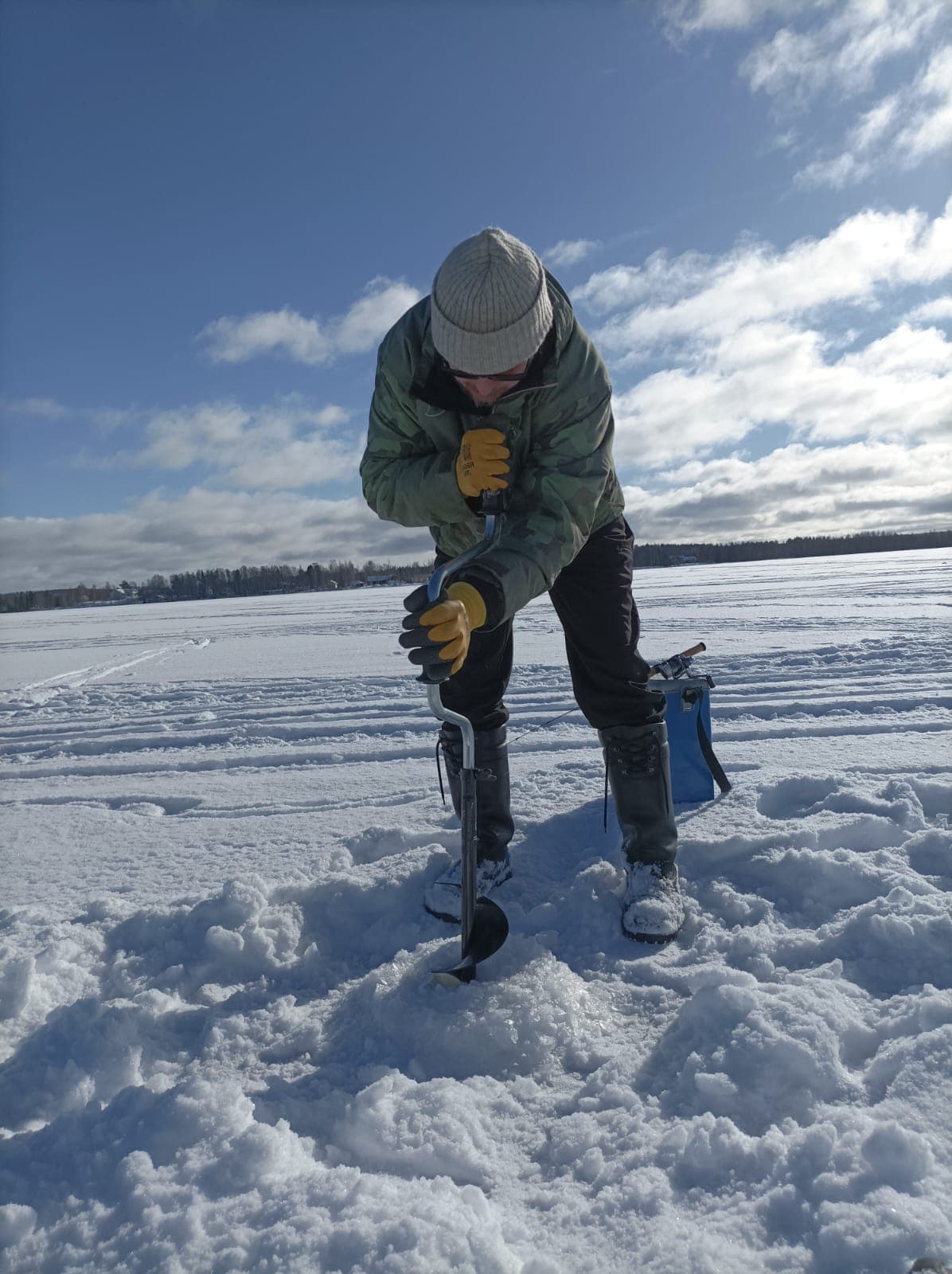
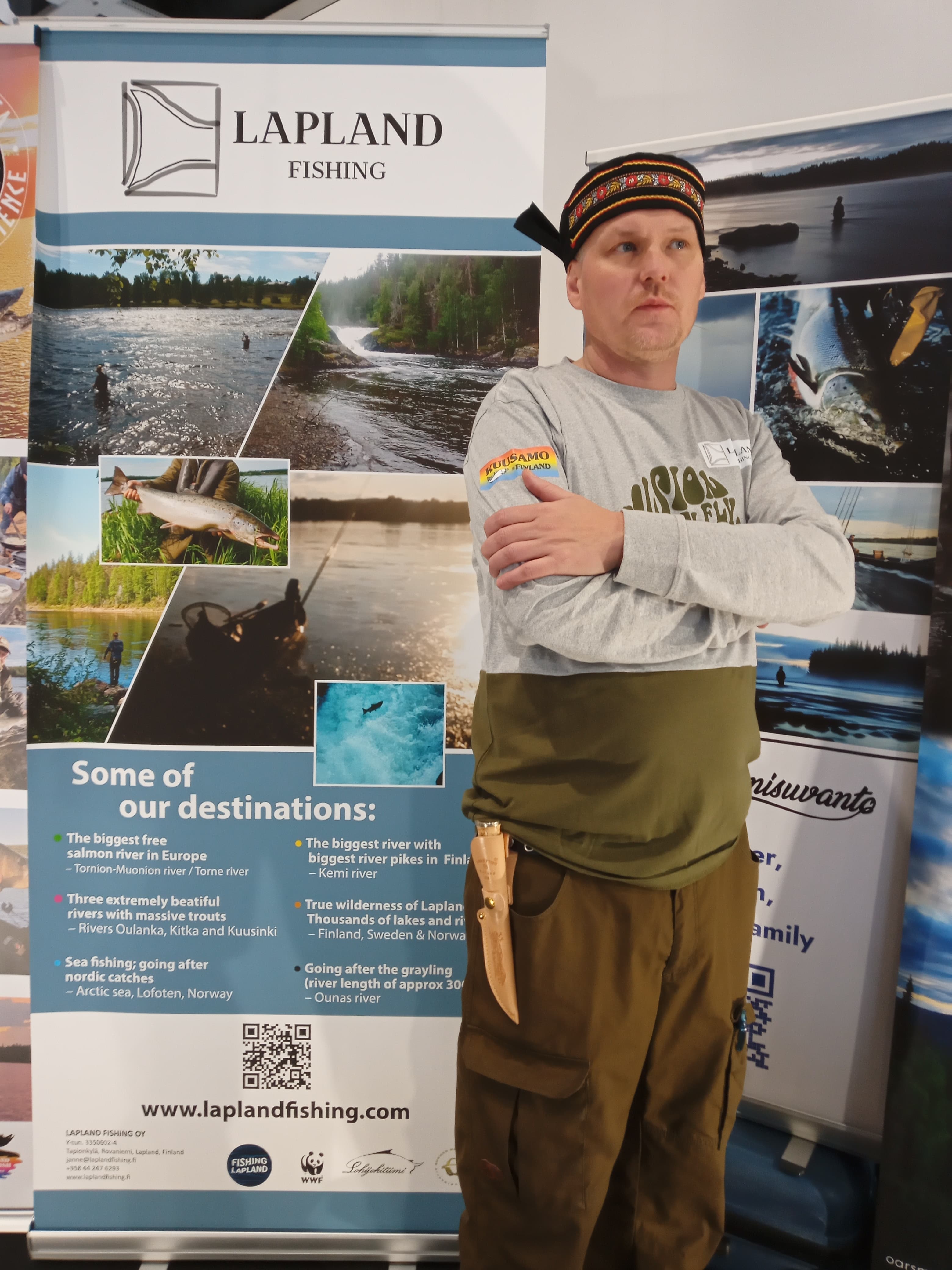
Janne of Lapland Fishing is a seasoned fishing guide who has spent thousands of hours on Lapland’s rivers, lakes and wilderness waters. He guides clients year-round from ice-fishing trips to river fishing, helping visitors experience Lapland’s nature from a local’s point of view. In this interview Janne tells visiting anglers what they actually need to know — and why June is the best month to head for the water.
What are Lapland’s biggest differences compared to southern Finland?
“The biggest, most obvious differences are right there in the conditions you can see — the climate, the population, the landscape types,” Janne begins. Lapland has four distinct seasons; summers can be hot in places and winters extremely cold. Temperatures can rise to +30 °C or drop tens of degrees below zero.
Finnish Lapland has roughly 180,000 inhabitants, slowly declining. “Look at the map and the meaning starts to dawn: population density is very low.” Lapland holds Finland’s largest rivers, and the landscape grows sparser the further north you go.
“You find peace of your own more easily in Lapland — lots of waters with very little fishing pressure, real wilderness, and in a way the old Finnish culture that urbanisation is steadily wiping out elsewhere.”
Why do clients keep coming back to Lapland year after year?
“A very large share of people who have visited Lapland either return or want to. The reason, very clearly and plainly, is nature — its sensitivity, a certain beauty in its harshness.”
If you could show a visitor just one fishing spot, where would it be?
Janne personally loves salmon fishing and pursuing migratory brown trout on small rivers — often genuinely demanding work. “To a visitor today I would show our great river the Torne-Muonio, its many faces. In years to come, if the Teno population strengthens or recovers and salmon fishing becomes possible again, I might show that instead.”
Everyman’s rights surprise tourists
“Yes, jokamiehenoikeus — everyman’s rights — is a wonder to visitors: how broad they are, what they allow. On the other hand we end up with very few waters in Lapland under highly specific regulations (hook sizes, hook counts, allowed line thickness and so on). Our rules are more general, defining things like just the open season.”
“This isn’t merely about chasing the catch — it’s about reaching for a connection with nature.”
Who would you recommend a guided fishing trip to?
“I recommend fishing trips to anyone with even some interest in nature. This isn’t merely about chasing the catch but about reaching for a connection with nature — the experience, the meditation end up taking the lead role.”
If you want to experience Lapland fishing with a local guide, take a look at Janne’s guided fishing trips on WildAccess.
Can a complete beginner succeed?
“A beginner can succeed. It happens very often that children catch fish when nobody else does. It’s their open-minded approach and maybe even their first time fishing — an unusual presentation of the lure, an unusual offering, gets the target fish to strike. I don’t think people generally appreciate or acknowledge how much this matters. Maybe they don’t want to — they focus on luck and that sort of thing.”
“As with many things, anglers settle into habits without realising it. I always encourage my clients to be open-minded, to challenge what I present, and to use their own familiar lures whenever those fit the situation.”
What kind of client tends to get the best results?
“A patient, persistent, inquisitive, open-minded and listening client gets the best results.”
What should a client bring on their first fishing trip to Finland?
“I’d hope clients would learn even a little about Finnish customs and culture. It can ease communication, which plays a big role between guide and guest. Guides of course also make an effort to learn about their clients’ cultures — within reason — because it smooths the experience.”
“An open mind is the best thing to bring. We Finns are brilliant in places, but also clearly a bit insane in others. That’s one reason Monty Python, for instance, always works on us.”
Why is Finland one of Europe’s best fishing destinations?
“From a catch standpoint, very large catches are possible for those who emphasise that side. There is a huge volume of water relative to the land area.”
“Finland as a country, as a geopolitical structure, is in itself very diverse and many-charactered — Lapland alone divides into several distinct Laplands of its own: Sea Lapland, Fell Lapland, Upper Lapland, the Peräpohjola / Southern Lapland area, and so on.”
“Finland is a safe, calm, functioning society. A big plus is the generally high language skills among people. Culturally — especially in Lapland — you can still see people helping each other and a spirit of joint effort that runs through everything. I feel it most strongly in the Meänmaa area of western Lapland.”
Which fish should a visitor try to catch?
“This is very relative and subjective. Perch is our national fish — that’s why it. More generally, places in the world where you can catch a big salmon or migratory brown trout are getting scarce. So maybe focus here?”
What’s the best month to fish in Lapland?
“If you must pick one month, it’s June. Nature truly wakes up, and the activity shows in the fish — the salmon run begins.”
Is guided fishing worth it?
“A skilled local professional offers a far deeper experience of the environment: catch reliability rises, understanding of the current location, customs and culture grows. The best guides create memories that last a lifetime. It’s also a big responsibility.”
Janne offers guided river-fishing and private trips in Lapland — from a local professional who knows the waters and the culture.
What should a foreign angler know before fishing in Finland?
“If you find out, even a little, about your own range of movement, the current price level, your destination (region, city) and the culture — things go more easily. Strictly speaking you don’t need to know anything in advance, and that’s perfectly fine too.”
What do you hope fishing visitors understand about nature?
“I’d hope my clients — and everyone — would understand that the angler is a conservationist, in the deepest sense. Being in nature builds an understanding of it, and moving through it brings peace.”
“The fish stock is one signal of nature’s condition — the head of a particular chain, if you think of it that way. By returning native fish where they belong, and acting to make that happen, we look after nature as a whole, with the great final mystery it presents to us.”
What single tip would you give a foreign angler coming to Finland?
“Take your time.”